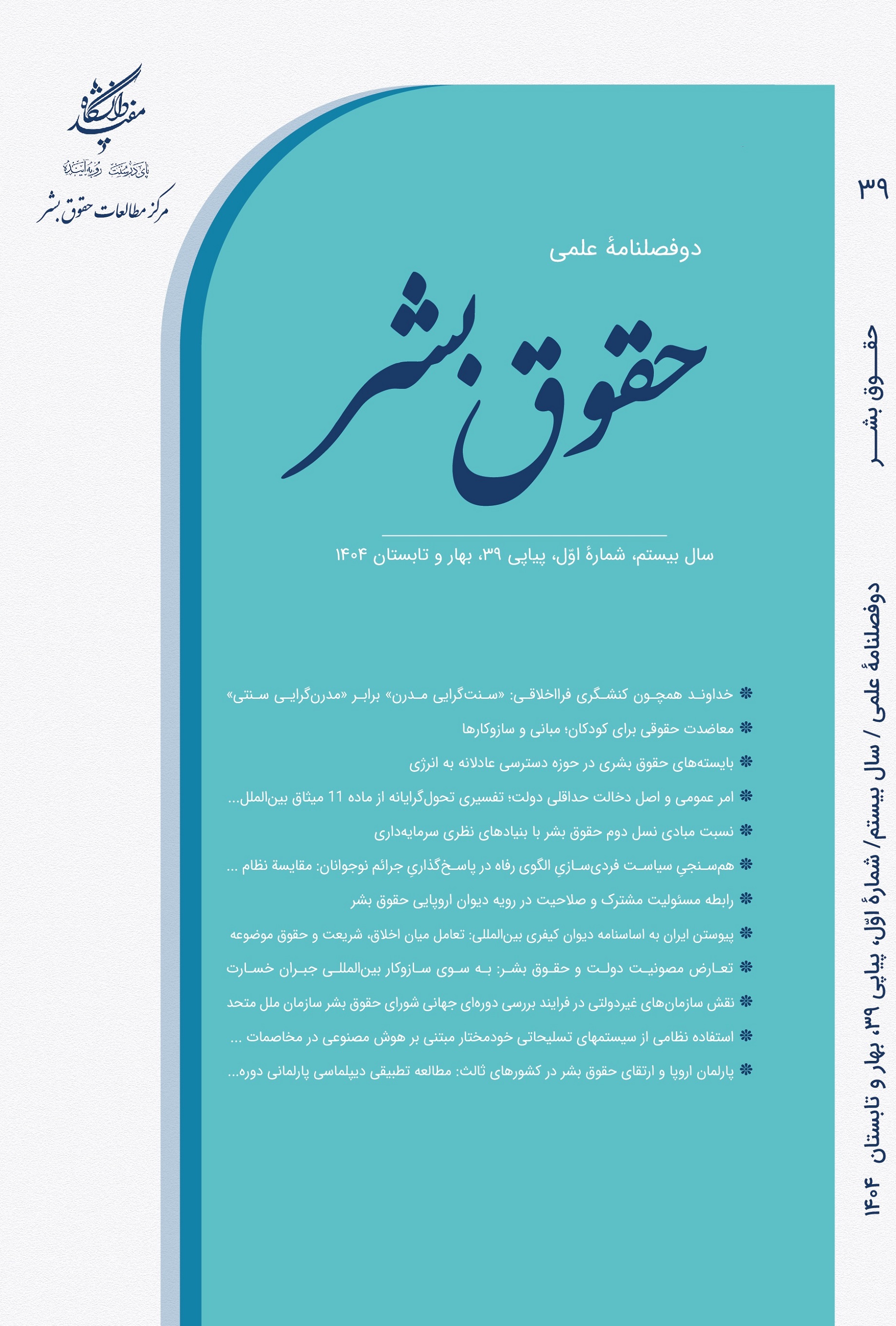
دوفصلنامۀ بین‌المللی حقوق‌بشر

دوفصلنامۀ بین‌المللی حقوق‌بشر

هم سنجیِ سیاست فردی سازیِ الگوی رفاه درپاسخ گذاریِ جرایم نوجوانان: مقایسۀ نظام بین المللیِ حقوق بشر و حقوق ایران

نوع مقاله : مقاله پژوهشی

نویسندگان
1 استادیار، دانشکده حقوق و علوم اجتماعی، دانشگاه تبریز، تبریز، ایران.
2 استاد، دانشکده حقوق و علوم سیاسی، دانشگاه فردوسی مشهد، مشهد، ایران.
چکیده
یکی از مبانی بنیادینِ رعایتِ بهترین مصلحت درکیفرگذاری جرایم نوجوانان، التزام به الگوی رفاه است. الگوی رفاه در پرتو افتراقی‌سازی پاسخ‌ها، بازسازی وضعیت رفتاری/ اوصاف شخصیتی و بازپذیریِ اجتماعی مطلوب را با هدف اصلاح و هنجارمندسازی مورد تأکید قرار می‌دهد. تعهد به این الگو، مستلزم پذیرش ابعاد حقوقی/بالینی درتعیین کیفر است. ابعاد حقوقی دربرگیرندۀ التزام به فردی‌سازی پاسخ‌ها از مجرای کاربست رویکرد تعدیل‌یافتۀ کودک‌مدار، طیفی‌سازی پاسخ‌ها، حبس‌زداییِ حداکثری و ‌توازن‌بخشی حقوق متهم/جامعه است. مقرره‌های گوناگونِ اسناد بین‌المللی به نحو الزام یا ارشاد حاکی از پذیرش این ابعاد و هنجارمندی گفتمان رفاه‌مدار درکیفرگذاری است؛ به‌طوری که می‌توان تعهد به کیفرگذاری تعدیل‌یافته، تضمین برابرِ حق بر تأمین و حق برامنیت، کاربست متغیرهای بالینی، عدول از حبس‌گرایی وکثرت‌گرایی ارفاق‌های جایگزینِ حبس را به عنوان شاخص‌های فردی‌سازی دراین اسناد ملاحظه کرد. در مقابل، حقوق ایران در کاربست‌ این ابعاد با نارسایی‌های قانونیِ گوناگونی مواجه است. تأکید بر شدت و ماهیت‌ جرم، طیفی‌زدایی پاسخ‌ها، تضعیف رویکرد کمینه‌گرا به سالب آزادی، توجه ناکافی به جایگزین‌های مراقبتی، ناهمگونیِ ماهیتِ تعدیل‌یافتۀ پاسخ-ها و اولویتِ تضمینِ حق بر امنیت از جملۀ این ایرادات است. راهکار برون‌رفت‌از این ابهامات، اصالت‌زدایی ازمتغیر‌های غیربالینی، تعیین کیفر بر اساس وضعیت بالینی از مجرای تعمیم پاسخ‌های‌تفریدساز، دوری‌گزینی از رویکرد کانون‌زایی و توجه به رویکرد عدالت کیفریِ متوازن است.
کلیدواژه‌ها

موضوعات


عنوان مقاله English

Comparison of individualization policy of the welfare model in the penalization of juvenile delinquency: a comparison of the international human rights system and Iranian rights.

نویسندگان English

Parizad kavosi Khasraghi 1
Abdolreza Javan Jafari 2
1 Assistant Professor, Faculty of Law and Social Sciences, University of Tabriz, Tabriz, Iran.
2 Professor, Faculty of Law and Political Science, Ferdowsi University of Mashhad, Mashhad, Iran.
چکیده English

One of the fundamental principles of observing the best expedient in penalization of juvenile delinquency is adherence to the welfare model. The welfare model emphasizes the reconstruction of the behavioral state/characteristics and desirable social receptivity with the aim of reforming. The requirement of commitment to this model is to pay attention to the legal/clinical dimensions. The legal aspects include the commitment to individualize the responds through the application of the modified approach, maximum and de-incarceration. The provisions of international documents indicate the acceptance of these dimensions and the normality of the welfare discourse in sentencing as a requirement or guidance; In this way, the commitment to modified punishment, the use of clinical variables, the avoidance of incarceration and the pluralism of alternatives to incarceration as indicators of individualization in this document observed. Iranian laws are faced with various legal inadequacies in the application of these dimensions. Emphasis on the severity of the crime, weakening of the minimalist approach to deprivation of liberty, the heterogeneity of the adjusted nature of responses, and the priority of guaranteeing the right over security are among these objections. The way out of these ambiguities is to de-authenticize non-clinical variables, determine the punishment based on the clinical situation, avoid the focalization approach and pay attention to the balanced criminal justice approach.

کلیدواژه‌ها English

welfare model
individualization
legal dimensions
penalization international documents
juvenile crimes
 سیاهه منابع
الف- منابع فارسی:
ایروانیان، امیر. «لایحه رسیدگی به جرایم‌اطفال و نوجوانان در پرتو ملاک‌های سیاستگذاری جنایی»، همایش مجموعه مقالات بزرگداشت استادحسن دادبان. به کوشش: تهمورث بشیریه. تهران: انجمن آثار و مفاخر فرهنگی، 1390.
 پارساپور، محمدباقر، و سوسن نوربخش. «معیارهای ارزیابی مصلحت‌کودک در فقه امامیه، حقوق ایران و کنوانسیون حقوق کودک»، پژوهش تطبیقی‌حقوق اسلام و غرب 2، شماره 3 (پاییز 1394): 1- 28.
پیوندی، غلامرضا. حقوق کودک. چاپ اول. تهران: پژوهشگاه فرهنگ و اندیشهٔ اسلامی،1390.
تفسیر حقوق کودک در آینهٔ نظریه‌های کمیتهٔ حقوق کودک سازمان ملل متحد. ترجمهٔ امیرحسین محبعلی، مریم مهیمنی و زهره سرائی. تهران: انتشارات شهردانش،1398.
شاملو، باقر. عدالت کیفری و اطفال. چاپ دوم. تهران: نشر جنگل، 1391.
شمس ناتری، محمدابراهیم، و زهرا احمدی ناطور. «درآمدی بر رویکردهای نوین قانونگذار در نظام آزادی مشروط»، دیدگاه‌های حقوق قضایی 20، شماره 72 (زمستان 1394): 131- 159.
شمس‌ناتری، محمدابراهیم، و مسعود مصطفی‌پور. «تلاقی اندیشه‌های جرم‌شناختیِ بازپروری و ناتوان‌سازی در ق.م.ا 1392»، پژوهشنامهٔ حقوق کیفری 8، شماره 15 (بهار و تابستان 1396): 111- 134.
غلامی، حسین. کیفرشناسی (کلّیات ومبانی پاسخ‌شناسی به جرم). چاپ سوم. تهران: میزان،1399.
قپانچی، حسام، و حمیدر ضا دانش‌ناری. «الگوهای دوگانهٔ فرآیند کیفری: کنترل‌جرم و دادرسی منصفانه»، آموزه‌های‌حقوق‌کیفری 9، شماره 4 (پاییز و زمستان 1391): 167- 184.
معاونت حقوقی قوه قضاییه. گزیده اسناد بین‌المللی حقوق کودک. ترجمهٔ وحید هدایتی، شهناز چراغ و سارا غلامی. تهران: انتشارات خرسندی، 1394.
مهرا، نسرین. "نظام عدالت کیفری اطفال از منظر حقوق بین‌الملل" در: مجموعه مقالات عدالت کیفری کودکان و نوجوانان. تهران: میزان، 1390.
میثمی، فاطمه، آیدا آقاجانی، و آرامش شهبازی. «بهترین منفعت کودک در حقوق بین‌الملل بشر و حقوق ایران: تأملی در رویه و نظریه»، پژوهش‌های حقوق تطبیقی 24، شماره 2 (تابستان 1399): 139 – 162.
نجفی‌توانا، علی. «ضرورت تشکیل پروندهٔ شخصیت دردادرسی‌اطفال بزهکار»، خانواده‌پژوهی 5، شماره 2 (آذر 1388): 293- 319.
نیازپور، امیرحسن. «حقوقی‌سازی یافته‌های جرم‌شناسانه در کتاب اول قانون مجازات اسلامی 1392»، تحقیقات حقوقی 18، شماره 72 (زمستان 1394): 233- 259.
وینتردایک، جان. ای. نظام عدالت کودکان و نوجوانان در عرصهٔ بین‌الملل: دانشنامهٔ عدالت کیفری کودکان و نوجوانان. ترجمهٔ هانیه هژبرالساداتی. تهران، انتشارات نگاه معاصر، 1397.
ب-منابع لاتین:
 
Cipriani, Don. Children’s Rights and the Minimum Age of Criminal Responsibility: A Global Perspective. England: Ashgate Publishing, 2009.
Committee on the Rights of the Child. Concluding Observations of the Committee on the Rights of the Child: Iran (Islamic Republic of), CRC/C/15/Add.254, 31 March 2005.
Connor, John. “Reflections on the justice and welfare debate for children in the Irish criminal justice system.” Irish judicial studies journal 3, (2019): 19-39.
Forde, Louise.Welfare, Justice and Diverse Models of Youth Justice: A children’s Right.” The International Journal of children’s Rights 29, no. 4 (2021): 920-945.
Green, David A. “Comparing Penal Cultures: Child-on-Child Homicide in England and Norway. In Crime, punishment, comparative perspective. Chicago: University of Chicago press, 2007.
Hendrick, Harry. Histories of Youth Crime and Justice. London: Sage, 2006.
Lowenkamp, Christopher. “Intensive supervision programs: Does program Philosophy and the principles of effective intervention matter?.” Journal of Criminal Justice 38, no. 4 (2007): 368-375.
Mc Ara, Lesley. Models of youth justice. A New Response to Youth Crime. England: Willan, 2010.
Mears, Daniel, Joshua Cochran, Brian Stults, and Sarah Greenman. “The true juvenile offender: Age effects and juvenile court sanctioning.” Criminology 52, no. 2 (2014): 169-194.
Muncie, John. Youth and crime. London: sage publishing, 2014.
 Smith, Roger, and Patricia Gray. “The changing shape of youth justice: Models of practice.” Criminology & Criminal Justice 19, no. 5 (2018): 554- 571.
United Nation Rules for the Protection of Juveniles Deprived of their Liberty 1990.
United Nation Standard Minimums Rules for the Administration of Juvenile Justice 1985.
Young Susan, Ben Greer, and Richard Church.Juvenile delinquency, welfare, justice and therapeutic interventions.” Psych Bulletin 41, no. 1 (2017): 21-29.
ارسال نظر در مورد این مقاله
نام را وارد کنید.
نشانی پست الکترونیکی را به درستی وارد کنید.
وابستگی سازمانی را به درستی وارد کنید.
توضیحات را وارد کنید (حداقل 50 حرف)
CAPTCHA Image
شناسه امنیتی را به درستی وارد کنید.